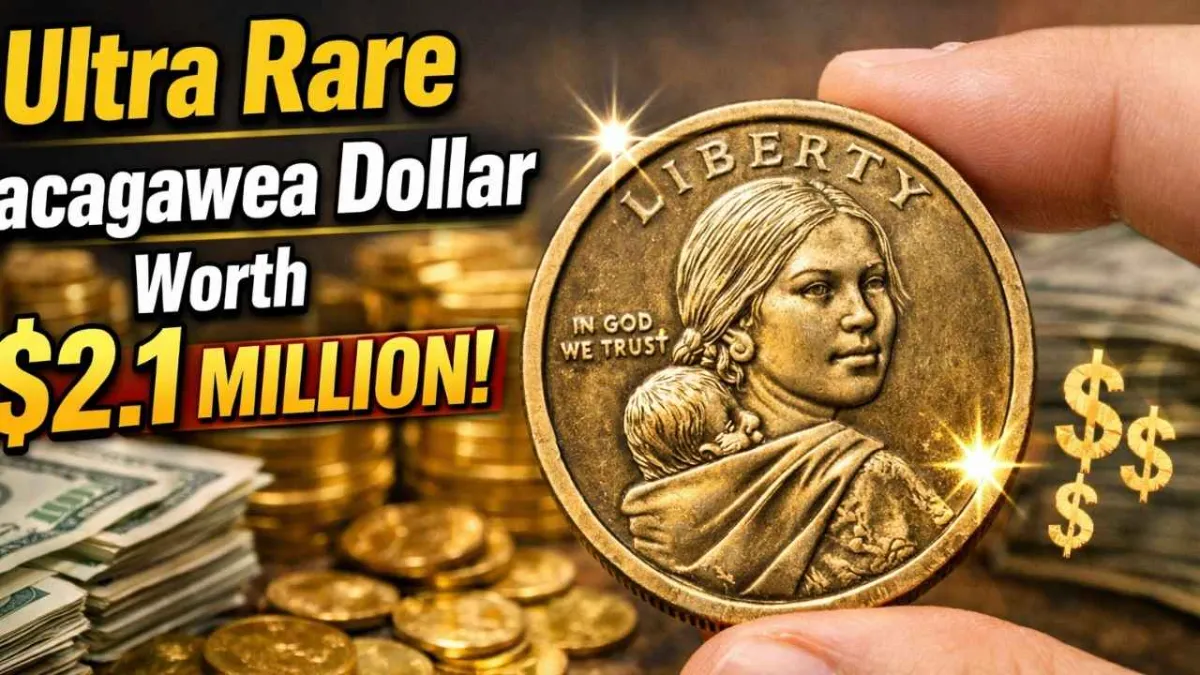
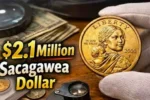
Ultra Rare Sacagawea Dollar; The Sacagawea dollar is one of the most recognizable modern U.S. coins — but did you know that certain rare versions have been rumored to reach values as high as $2.1 million?
While most Sacagawea dollars are worth face value, a handful of extremely rare error coins and special mint varieties have sold for tens of thousands — and in some cases, far more. The key is knowing how to identify mint marks, spot valuable errors, and protect your coin’s condition.
Let’s break down everything collectors need to know.
A Quick History of the Sacagawea Dollar
The Sacagawea dollar was first introduced in 2000 by the United States Mint. The coin features:
-
Obverse (front): Sacagawea carrying her infant son, Jean Baptiste
-
Reverse (original 2000–2008): A soaring eagle design
In 2009, the reverse design changed to rotating Native American themes, while Sacagawea remained on the obverse.
Though billions were produced, certain rare varieties stand out dramatically in value.
Is a Sacagawea Dollar Really Worth $2.1 Million?
Headlines often exaggerate values. There is no verified public sale at $2.1 million, but some ultra-rare Sacagawea errors have sold for:

-
$50,000 to $200,000+
-
Special presentation strikes valued even higher
-
Unique prototype or mule errors reaching six figures
The multi-million-dollar figure usually reflects speculative or insurance estimates for extremely rare specimens.
The Most Valuable Sacagawea Dollar Errors
1. The 2000-P “Mule Error” (Quarter Obverse + Dollar Reverse)
One of the most famous modern U.S. mint mistakes is the 2000-P Sacagawea mule error. This coin mistakenly combines:
-
The obverse of a Washington quarter
-
The reverse of a Sacagawea dollar
Only a small number are known to exist. These coins have sold for over $100,000, making them among the most valuable modern U.S. errors.

2. Cheerios Dollar (2000-P)
In early 2000, special Sacagawea dollars were placed in Cheerios cereal boxes as part of a promotion. Some of these coins feature enhanced tail feathers on the eagle — a subtle but highly collectible variation.
High-grade examples have sold for $5,000–$25,000+.
3. Wounded Eagle Error
This variety shows what appears to be a line or die gouge across the eagle’s belly on the reverse. Known as the “Wounded Eagle,” it can be worth $200–$3,000+, depending on condition.
4. Off-Center & Planchet Errors
Like other U.S. coins, Sacagawea dollars can feature:
-
Off-center strikes
-
Broadstrikes
-
Missing edge lettering (on later issues)
-
Wrong planchet errors
Dramatic errors can bring thousands of dollars at auction.
How to Identify Mint Marks
Mint marks appear on the obverse (front) of the coin.
-
P = Philadelphia
-
D = Denver
-
S = San Francisco (proof coins)
Proof coins from San Francisco usually have mirror-like surfaces and sharper details. These are typically more collectible than circulated coins.
Sacagawea Dollar Value Chart (Estimated)
| Coin Type | Estimated Value |
|---|---|
| Standard Circulated | $1 |
| Proof (S Mint) | $5 – $50 |
| Cheerios Dollar | $5,000 – $25,000+ |
| Wounded Eagle Error | $200 – $3,000+ |
| Mule Error (2000-P) | $100,000 – $200,000+ |
| Ultra-Rare Specimen (High Grade) | $250,000+ |
Actual market value depends on grading, rarity, and demand.
How to Maximize Collector Value
✅ Do Not Clean the Coin
Cleaning can permanently reduce value.

✅ Store Properly
Use protective coin holders and avoid humidity.
✅ Get Professional Grading
Submit rare coins to PCGS or NGC for authentication and grading.
✅ Document Provenance
If the coin has a unique history (e.g., cereal box find), documentation can increase appeal.
Where to Sell a Rare Sacagawea Dollar
-
Major auction houses
-
Certified coin dealers
-
Online numismatic marketplaces
-
Coin shows
For high-value coins, auctions typically generate the strongest competition and best prices.
Final Thoughts
While the idea of a $2.1 million Sacagawea dollar may be more myth than verified reality, certain rare versions of this coin are undeniably valuable. The famous 2000-P mule error and Cheerios dollar prove that even modern coins can become extraordinary collector treasures.
If you have Sacagawea dollars tucked away in drawers or coin jars, it’s worth taking a closer look. One rare variety could be worth far more than its $1 face value.
Q1. Are all Sacagawea dollars valuable?
No. Most are worth face value unless they feature rare errors or special varieties.
Q2. How do I know if I have a Cheerios dollar?
Look for enhanced tail feather details on a 2000-P coin from the original cereal promotion.
Q3. What is the rarest Sacagawea dollar?
The 2000-P mule error combining a quarter obverse and dollar reverse is considered the rarest.
Q4. Should I get my coin graded?
Yes, especially if you suspect it’s an error or high-grade example. Authentication significantly increases market value.