This guide breaks down the secrets behind these rare coins, what makes them valuable, and how to spot potential treasures in your collection.
What Is the Bicentennial Quarter?
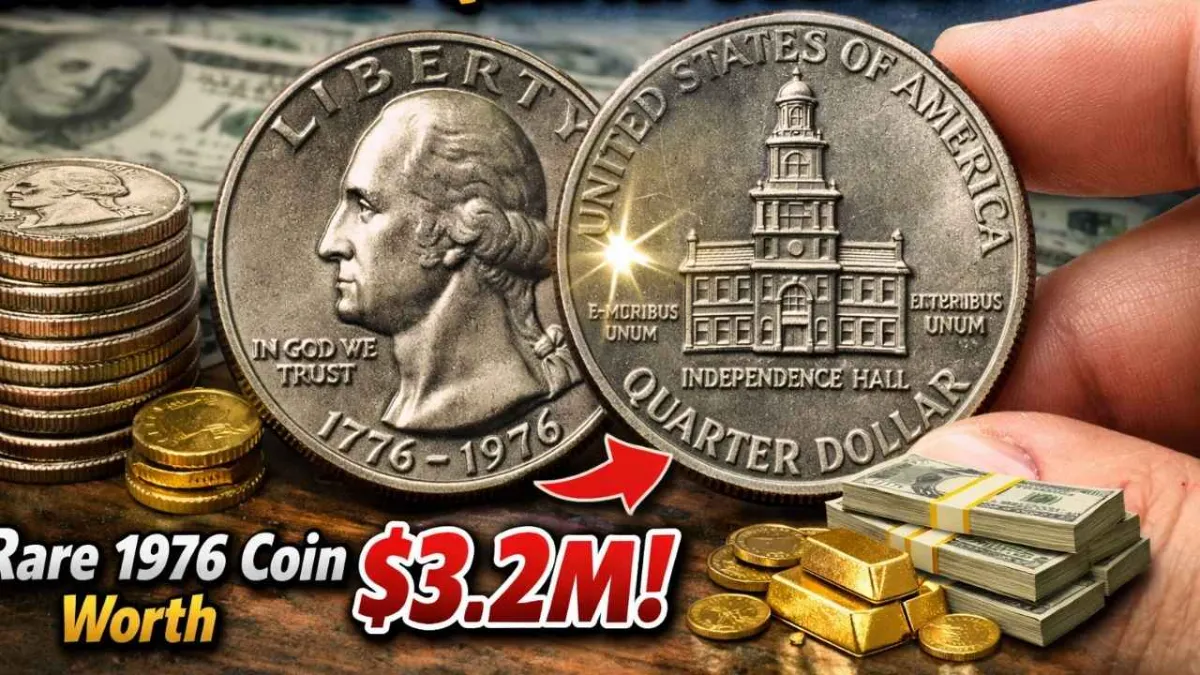
In 1975–76, the U.S. Mint issued special quarters to celebrate the 200th anniversary of the Declaration of Independence. These coins all carry a dual date — “1776–1976” — on the obverse (front) and a distinctive reverse showing a colonial drummer and torch encircled by 13 stars.
Millions were minted, but most are worth just 25 cents. However, rare varieties and errors — especially those in pristine condition or with production mistakes — can be astonishingly valuable.
Why Some 1976 Quarters Are Worth So Much
There are two main reasons why certain Bicentennial quarters become instant collector favorites:
1. Rare Errors and Misprints
Coins with production errors — such as double dies, off-center strikes, missing layers, or die cracks — can be extremely scarce. Collectors prize these mistakes because they are not meant to exist and can be verified by grading services.
Some rare error quarters have been documented with values in the hundreds of thousands to millions depending on severity and rarity.
2. Ultra-High Graded Proof Coins
Proof coins are specially made with mirror-like finishes for collectors. Certain Bicentennial proof quarters exist in extremely high grades (MS70/PR70) — meaning perfect condition with no visible flaws even under magnification.

A tiny number of these have sold for multi-million-dollar prices at major auctions.
Most Valuable 1976 Quarter Varieties
Here are the main types that command high prices:
1. 1976 Bicentennial Quarter MS70/PR70
| Type | Notes | Estimated Value |
|---|---|---|
| Double Die Obverse / Reverse MS70 | Perfect mirror surface; rare | $250,000 – $3.2 M+ |
| Proof Bicentennial Quarter PR70 | Mint condition proof | $50,000 – $250,000+ |
| Off-Center / Misalignment Errors | Striking mistakes | $5,000 – $100,000+ |
Values vary with demand, certification, and auction performance.
The $3.2 Million Coin — What Makes It Unique?
The most valuable 1976 Bicentennial quarters are those with:
-
Perfect grading (MS70/PR70) — no imperfections, even under magnification
-
Rare combination errors, such as dramatic doubling and perfect strike

-
Low population — only a handful known to exist
-
Auction history — sales records that set price benchmarks
These coins are typically found in special collections or high-end auctions, and their value is driven by collector demand and rarity rather than face value.
How to Spot a Valuable Bicentennial Quarter
🔎 Look for Mirrored or Proof Surfaces:
Proof coins have a shiny, smooth, mirror-like finish unlike regular circulation coins.
🔎 Check for Errors:
Common collectible errors include:
-
Double die doubling on date/letters
-
Off-center strikes
-
Clipped planchets
-
Missing lettering or irregular rims
🔎 Assess Condition:
Coins with scratches, wear, or corrosion have less value. High grades (MS65+) increase the possible value significantly.
🔎 Use a Magnifying Loupe:
A 5× to 10× magnification glass helps you see small errors or die characteristics.
Should You Get Yours Graded?
Yes! If you think you’ve found a rare 1976 quarter, consider sending it to a reputable grading service like:

-
PCGS (Professional Coin Grading Service)
-
NGC (Numismatic Guaranty Corporation)
Grading validates authenticity, condition, and error type — which dramatically affects value.
Where Rare Quarters Are Found
Most high-value Bicentennial quarters come from:
-
Estate collections
-
Old coin albums untouched since the 1970s
-
Coin shows and auctions
-
Passed-down family collections
Finding one in pocket change today is extremely rare — but not impossible.
Common Value Ranges for 1976 Quarters
| Category | Typical Value |
|---|---|
| Circulated (common) | 25¢ |
| MS60 – MS65 (regular strike) | $1 – $25 |
| Proof 1976 (common) | $5 – $50 |
| Error varieties | $50 – $20,000+ |
| Ultra-rare graded examples | $100,000 – $3.2 M+ |
Final Thoughts
The 1976 Bicentennial quarter is more than a symbol of American heritage — it’s a potential treasure trove for collectors. While most coins are ordinary, rare errors and perfectly preserved proof coins have commanded incredible prices at auction.
If you think you have a rare 1976 quarter, a professional grading and expert appraisal could reveal a piece worth far more than its face value.
1. Are all 1976 Bicentennial quarters valuable?
No — most are worth face value, but rare error and high-grade proof coins can be extremely valuable.
2. What is the most valuable 1976 quarter ever sold?
Some double die or perfect MS70 coins have sold for more than $3.2 million at major auctions.
3. How do error coins form?
Errors occur during the minting process due to die issues, misalignment, or planchet mistakes.
4. Should I get my coin graded?
Yes — professional grading greatly increases collector confidence and helps establish market value.