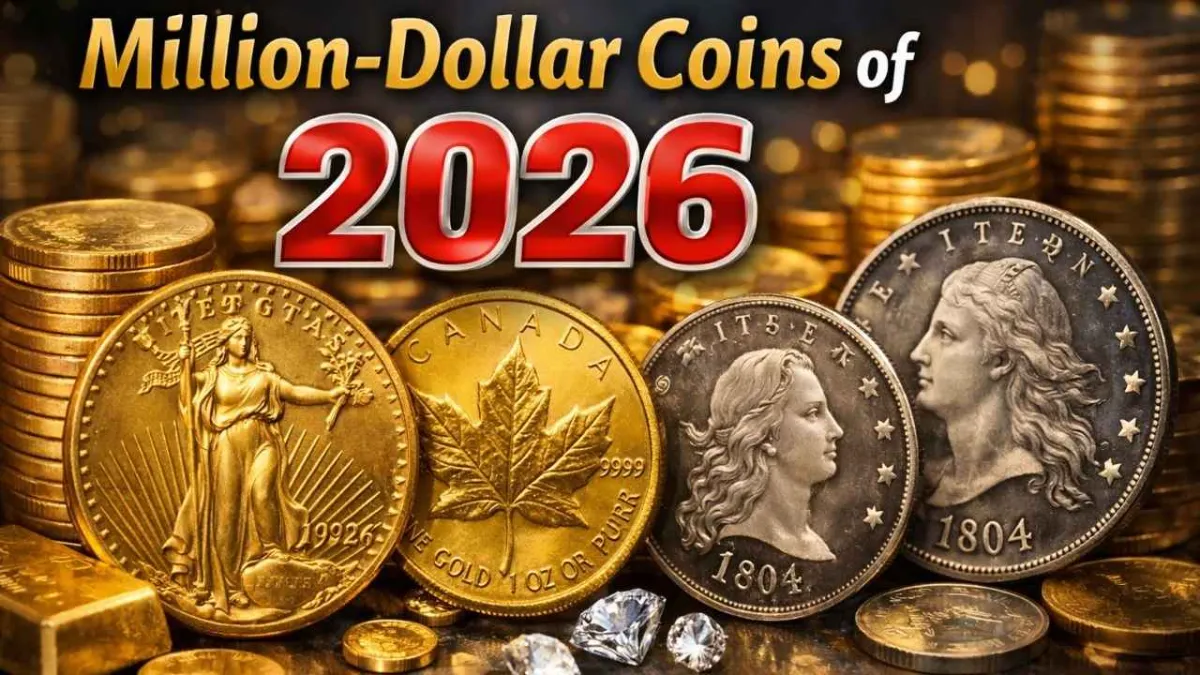
Million-Dollar Coins of 2026: Coin collectors around the world are always on the lookout for rare, unique, and historically significant coins, but in 2026 the market is buzzing with a new roster of million-dollar rarities. These special coins — whether due to mint errors, extreme scarcity, historical importance, or perfect grading — are now coveted by collectors and investors alike.
In this guide, we present the Top 10 Million-Dollar Coins of 2026 that serious numismatists are watching closely. Whether you’re a seasoned collector or just getting started, this list will help you understand what makes these coins so valuable.
1. 1933 Saint-Gaudens Double Eagle – Ultra Rare Specimen
One of the most legendary U.S. coins, the 1933 Saint-Gaudens Double Eagle continues to dominate the million-dollar category. Because most examples were melted down, only a handful survive in private or institutional hands. A perfect or certified specimen can fetch well over $3 million.
Why it’s valuable: Extremely limited supply, iconic design, and high demand.
2. 1794 Flowing Hair Silver Dollar – First Dollar Struck
Believed by many experts to be one of the first U.S. silver dollars ever made, the 1794 Flowing Hair Dollar is a historical treasure. Rare high-grade examples can exceed $2.5 million at auction.
Why it’s valuable: Historical significance and extreme rarity.
3. 2007-P 50 State Quarters – “Doubled Die Obverse” Errors
Some state quarters from the 2007 series were struck with dramatic doubled die errors, making them unusually rare and collectible. Certain certified examples in pristine condition are now valued in the $1 million+ range.
Why it’s valuable: Error rarity and collector demand.
4. 1804 Silver Dollar — Class I “King of American Coins”
The 1804 Silver Dollar remains one of the most famous U.S. rarities. Only a small number of original Class I examples are known, with some selling for $2 million+ at historic coin auctions.

Why it’s valuable: Legend, historical value, and scarcity.
5. 1913 Liberty Head Nickel – Top-Grade Examples
Only five genuine 1913 Liberty Head Nickels are known to exist. Those that reach MS-rated (Mint State) grading can command $1 million or more depending on condition and provenance.
Why it’s valuable: Extremely low surviving population and collector prestige.
6. 1976 Bicentennial Quarter – Perfect Proof Errors
Most Bicentennial quarters are common, but rare proof or error specimens with perfect grading (e.g., PR70) have surged in value. Some dramatic error varieties — especially certified high-grade doubles — have sold for $1 million+.
Why it’s valuable: Premium minting errors and perfect condition.
7. Pattern and Experimental Coins
Worldwide pattern coins — experimental or trial strikes that were never mass-produced — often appear at auction with prices exceeding $1 million. Notable examples include early pattern cents and unique design trials from major mints.
Why it’s valuable: One-of-a-kind history and no official mintage.
8. Early U.S. Gold Coins in MS70
Certain early U.S. gold coins (pre-1900) graded MS70 by top services like PCGS or NGC are extremely rare. Because virtually no others exist in perfect condition, these coins can reach million-dollar values.

Why it’s valuable: Perfect grades and lack of competition.
9. Ultra-Low Mintage Commemoratives
Some modern commemoratives, especially those with extremely low production runs, have developed million-dollar secondary market appeal — especially when paired with rare variations or premium grading.
Why it’s valuable: Scarcity and collector interest.
10. World Coins With Historic Provenance
Certain ancient or world coins — such as Roman gold staters, Byzantine solidi, or Chinese imperial pieces with documented royal hoard provenance — have recently crossed the $1 million threshold at auction.
Why it’s valuable: Rare artifacts and historical significance.
What Drives Value in Million-Dollar Coins?
These factors are key to why certain coins reach or exceed $1 million in value:
🔹 Rarity & Low Surviving Population
Coins with only a handful of known examples are extremely valuable.
🔹 Historical Significance
If a coin marks a first, a major historical event, or a unique period, its value soars.
🔹 Minting Errors or Unique Varieties
Misstrikes, doubled dies, and production mistakes can create coins that are instantly collectible.
🔹 Perfect or Near-Perfect Grading
Coins graded MS70/PR70 by professional services are often worth 10× more than lower-grade versions.
🔹 Provenance & Auction History
A documented ownership history or previous high auction result adds to desirability.
How to Identify a Potential Million-Dollar Coin
If you suspect a coin might be rare, consider:
-
Professional grading by PCGS, NGC, or ANACS
-
Detailed examination under magnification
-
Comparing against known rare varieties
-
Checking auction databases for past sales history

Always work with reputable dealers and grading services to authenticate and preserve your coins.
Where Buyers and Sellers Meet
Million-dollar coins are typically bought and sold through:
-
Major coin auctions (Heritage, Stack’s Bowers, etc.)
-
Specialist rare coin dealers
-
Private sales between collectors
-
High-end coin expos and conventions
These venues provide the best chance of achieving fair market value.
Protecting and Preserving Valuable Coins
To maintain value:
✔ Store coins in airtight holders or secure slabs
✔ Avoid handling with bare fingers
✔ Keep in stable temperature and humidity conditions
✔ Insure high-value items with proper appraisal
Final Thoughts
The Top 10 Million-Dollar Coins of 2026 represent the peak of rarity, history, and collector passion. Whether it’s a legendary early U.S. silver dollar or a perfect error quarter from the modern era, these coins excite collectors worldwide and command the highest prices at auction.
Even if you don’t own one yet, understanding what makes these coins valuable can help you spot potential treasures in your collection — or guide you toward wise investment decisions in numismatics.
1. What makes a coin worth $1 million?
Rarity, historical importance, error or variety status, perfect grading, and collector demand all contribute.
2. Should I get my rare coin graded?
Yes — professional grading helps verify authenticity and supports higher market value.
3. Can modern coins become million-dollar rarities?
Yes — especially if they have extreme errors, low mintage, or unique features.
4. Where can I sell or value rare coins?
Major coin auctions, specialist dealers, and grading services are the best avenues.