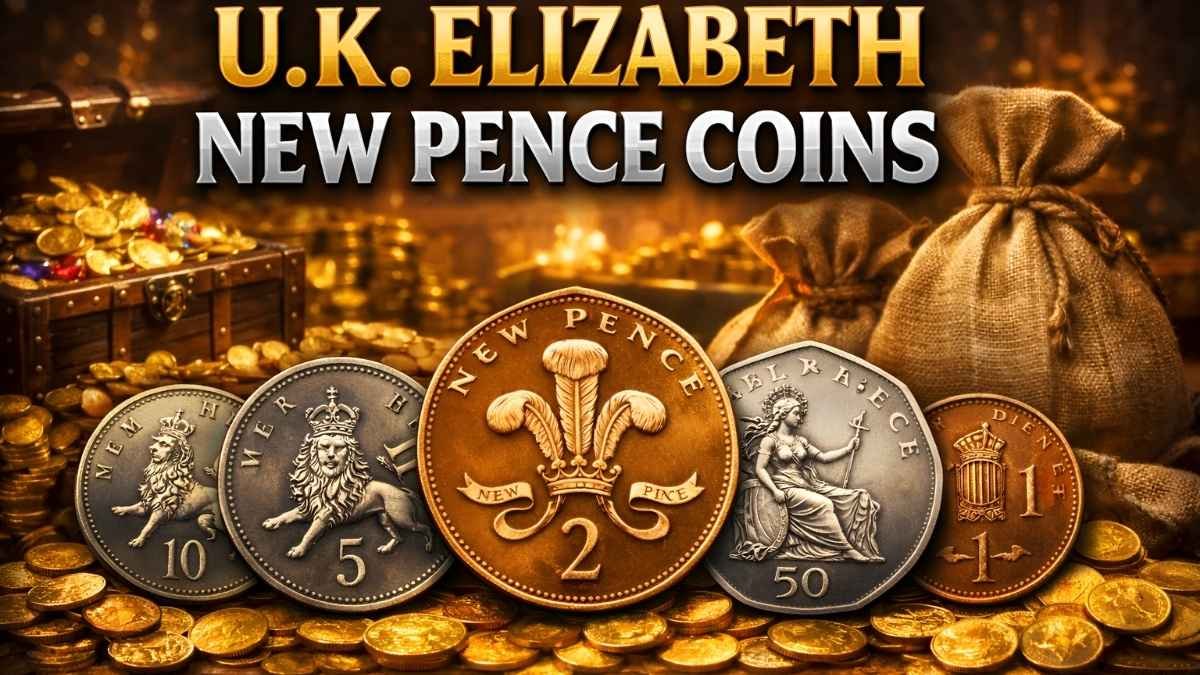
UK Elizabeth New Pence Coin: For many people in the United Kingdom, UK Elizabeth New Pence Coin old “New Pence” coins are simply spare change from decades past. But for collectors, certain early decimal coins issued during the reign of Queen Elizabeth II can be surprisingly valuable. Some rare varieties have sold for hundreds or even thousands of pounds due to minting errors, low production numbers, and historical significance.
When the UK switched to decimal currency in 1971, coins were marked “New Pence” to help the public adjust to the new system. In 1982, the wording was changed to simply “Pence.” That small wording difference — along with a few rare errors — created some highly collectible pieces.
Let’s explore five ultra-rare Elizabeth-era New Pence coins that collectors eagerly search for today.
1. 1971 New Pence 2p Coin (High-Grade Condition)
The 1971 2p coin was among the first decimal coins released. While millions were minted, examples in flawless, uncirculated condition can command impressive prices. Coins preserved in mint state with sharp details and original red lustre are particularly desirable.

2. 1975 No Mint Mark Error
Certain mid-1970s coins with striking irregularities — including missing mint marks or off-center strikes — are considered scarce. Although rare, verified examples in strong condition can attract significant collector interest.
3. 1983 “New Pence” 2p Mule Error
One of the most famous decimal rarities is the 1983 2p coin mistakenly struck with the old “New Pence” wording. By 1983, coins were supposed to read “Two Pence.” However, a small number were struck using the outdated reverse die.

This mule error makes the coin extremely valuable compared to standard versions from the same year.
4. 1971 Proof Set Variants
Special proof sets released during the early decimal years sometimes contain variations not found in circulation coins. Collectors often pay premium prices for proof coins with mirror-like finishes and limited production numbers.

5. Off-Center or Double-Strike Errors
Minting errors such as double strikes or off-center designs can significantly raise value. These mistakes occur during production and are usually caught quickly, making surviving examples rare.
Key Comparison Table
| Coin | Year | Unique Feature | Potential Value Range* |
|---|---|---|---|
| 2p New Pence | 1971 | First Decimal Issue | £10 – £300 (high grade) |
| Error Variant | 1975 | Minting Irregularity | £50 – £500+ |
| 2p Mule Error | 1983 | “New Pence” Wording | £1,000 – £5,000+ |
| Proof Set Coins | 1971 | Mirror Finish | £20 – £200 |
| Strike Errors | Various | Double/Off-Center | Varies by Condition |
*Values depend heavily on condition and authentication.

Why Condition Matters So Much
Collectors rely on professional grading standards. Coins with scratches, cleaning marks, or wear lose value quickly. Uncirculated examples — especially those kept in original packaging — are far more desirable.
If you suspect you own a rare coin, avoid cleaning it and consider consulting a reputable coin grading service.

Are These Coins Still in Circulation?
While most valuable examples are already in collections, some coins may still be tucked away in jars, old purses, or inherited collections. Since millions were produced in the early 1970s, it’s possible that overlooked pieces remain undiscovered.
1. Are all “New Pence” coins valuable?
No. Most are worth face value unless they are rare errors or in exceptional condition.
2. What makes the 1983 2p so special?
It was mistakenly struck with the old “New Pence” wording instead of “Two Pence.”
3. Should I clean old coins before selling?
No. Cleaning can reduce collector value.
4. Where can I check my coin’s authenticity?
A professional coin grading or numismatic expert can verify rare pieces.