1917 Walking Liberty Half Dollar: The 1917 Walking Liberty Half Dollar is widely regarded as one of the most beautiful coins ever produced in the United States. While millions were minted, certain rare varieties and high-grade examples have stunned collectors by reaching prices as high as $175,000 at major auctions. For numismatists, this coin represents both artistic brilliance and serious investment potential.
The coin belongs to the legendary Walking Liberty Half Dollar series, introduced in 1916. Designed during a golden era of American coin artistry, it quickly became a favorite among collectors.
A Design That Defined an Era
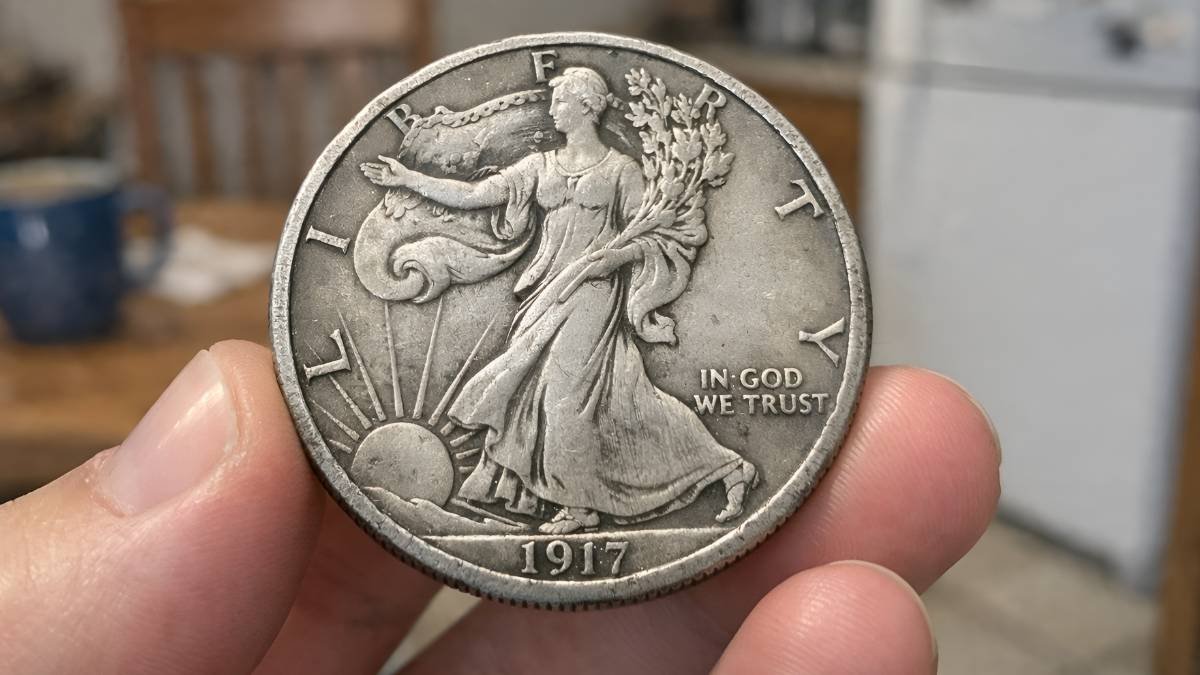
The obverse of the coin features Lady Liberty striding confidently toward the sunrise, draped in the American flag and carrying branches of laurel and oak. The reverse displays a powerful eagle perched on a rock, wings partially spread.
The design was created by renowned sculptor Adolph A. Weinman, whose work symbolized strength, hope, and national pride. Decades later, this same Liberty design inspired the modern American Silver Eagle bullion coin.
Why the 1917 Issue Is Special
Although the Walking Liberty series began in 1916, the 1917 coins are particularly important due to mint mark variations and limited availability in top condition.
The 1917 half dollar was minted in:
-
Philadelphia (no mint mark)

-
Denver (D mint mark)
-
San Francisco (S mint mark)
Collectors pay close attention to the placement of the mint mark on 1917 issues. Some coins have the mint mark on the obverse (front), while others display it on the reverse (back). These subtle differences create distinct collectible varieties.
What Makes One Worth $175,000?
Not every 1917 Walking Liberty Half Dollar is extremely valuable. The record-setting prices typically apply to coins that meet specific criteria:
-
Exceptional mint-state condition (MS67 or higher)
-
Rare mint mark placement

-
Strong strike detail
-
Original luster with minimal marks
High-grade examples are rare because many coins entered circulation and experienced heavy wear during the early 20th century.
Estimated Value Guide
| Variety | Condition | Estimated Value Range |
|---|---|---|
| 1917 (No Mint Mark) | Circulated | $25 – $150 |
| 1917-D Obverse | Uncirculated | $500 – $5,000 |
| 1917-S Obverse | High Mint State | $5,000 – $50,000 |
| Top-Graded Specimens | MS67+ | Up to $175,000 |
Values vary depending on grading and auction demand.
Silver Content Adds Base Value
The 1917 Walking Liberty Half Dollar contains 90% silver. Even heavily worn examples hold intrinsic silver value. However, collector demand — not just silver content — drives record-breaking prices.
Condition, rarity, and eye appeal remain the biggest value factors.

How to Identify Key Details
When examining a 1917 Walking Liberty Half Dollar, collectors look for:
-
Mint mark location (front or back)
-
Clear Liberty hand and gown details
-
Strong eagle feather definition
-
Minimal scratches or cleaning signs
Professional grading is strongly recommended for high-quality pieces.

Preserving a Valuable Coin
If you suspect you own a valuable example:
-
Never clean or polish it
-
Store it in a protective holder
-
Avoid direct handling
-
Seek professional authentication
Improper care can drastically reduce its value.
1. Is every 1917 Walking Liberty Half Dollar valuable?
All have silver value, but only high-grade or rare varieties reach premium prices.
2. What is the rarest 1917 variety?
High-grade 1917-S Obverse mint mark examples are among the most valuable.
3. Why does mint mark placement matter?
Different placements create distinct collectible varieties.
4. Can one really sell for $175,000?
Yes, but only in exceptional, near-perfect condition.