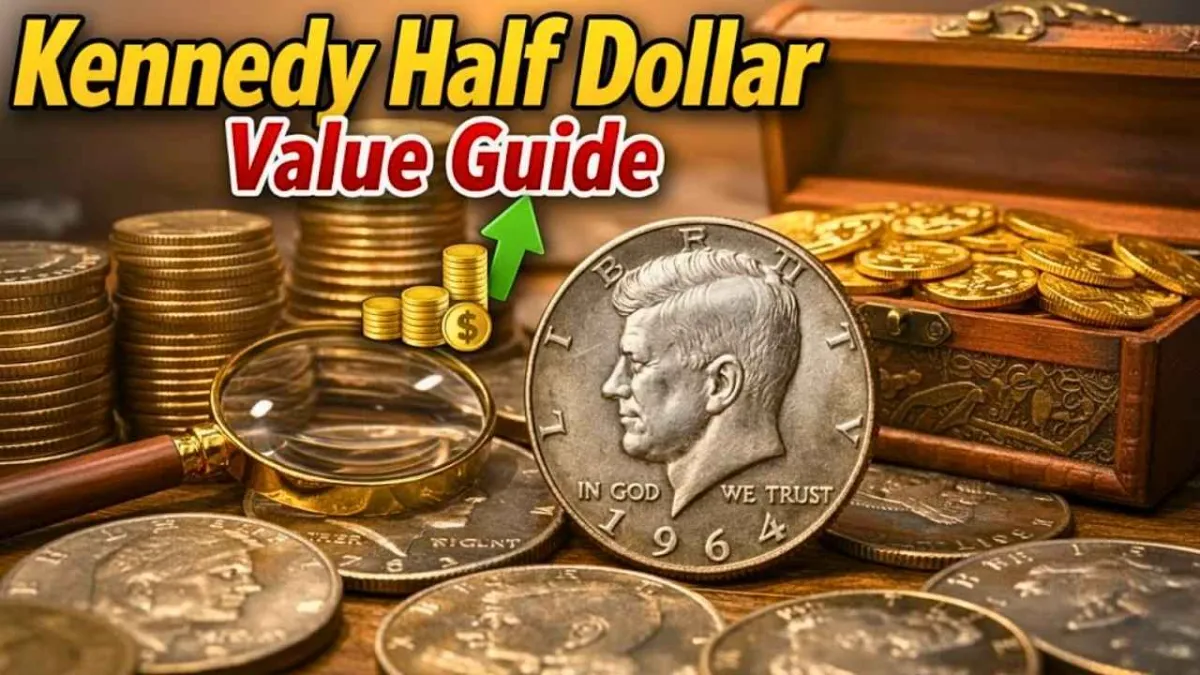
Kennedy Half Dollar Value Guide 2026; The Kennedy Half Dollar is one of America’s most iconic coins, first issued in 1964 as a tribute to President John F. Kennedy after his assassination. Over six decades later, these coins remain popular with collectors — not just for their historical significance, but also for the rare varieties and price trends shaping the market in 2026.
While most Kennedy Half Dollars are worth face value or slight premiums, certain dates, mint marks, and special issues can command significant prices — sometimes hundreds or even thousands of dollars.
This comprehensive guide covers rare varieties, historical context, current value trends, and how to spot valuable Kennedy Half Dollars.
History of the Kennedy Half Dollar
The Kennedy Half Dollar was introduced in 1964, replacing the Franklin Half Dollar. It quickly became a popular coin due to its connection with President Kennedy.
Initial 1964 coins were struck in 90% silver, followed by 40% silver versions from 1965–1970. After 1970, the coins transitioned to clad composition (copper-nickel), making silver examples much more collectible.
Key Factors That Influence Value
📌 Year and Mint Mark
Mint marks reveal where the coin was produced:
-
P – Philadelphia
-
D – Denver
-
S – San Francisco
Coins from certain years and mints are more valuable, especially those with low mintages or special finishes.
📌 Metal Composition
Silver versions (1964 at 90%, 1965–1970 at 40%) are inherently more valuable due to their precious metal content.
📌 Condition (Grade)
Uncirculated and proof coins graded by professional services like PCGS or NGC are worth far more than worn pieces.
Rare Kennedy Half Dollar Varieties to Watch in 2026
1. 1964 – 90% Silver First Year
The very first Kennedy Half Dollar is highly collectible:
| Condition |
Estimated Value |
| Circulated |
$10 – $15+ |
| Uncirculated (MS60–MS63) |
$20 – $75 |
| High-Grade (MS65+) |
$100 – $500+ |
Because of its silver content and historic significance, even common 1964 dates carry premiums over face value.
2. 1965–1970 – 40% Silver Issues
These coins contain less silver than the 1964 version — but they still hold value:
| Year |
Estimated Value (Uncirculated) |
| 1965 |
$5 – $25 |
| 1966 |
$5 – $25 |
| 1967 |
$5 – $25 |
| 1968 (D) |
$5 – $30 |
| 1969 (D) |
$5 – $30 |
| 1970 (S) |
$10 – $50+ |
Collectors seek these primarily for silver content and completion of type sets.
3. 1976 Bicentennial Half Dollar
Issued to celebrate America’s 200th anniversary, these feature a special reverse design.
| Type |
Estimated Value |
| Circulated |
$1.50 – $3 |
| Uncirculated / Proof |
$10 – $40+ |
While not extremely rare, some high-grade or proof issues attract premium interest.
4. 1995 Special Mint Set (SMS)
The 1995 Kennedy Half Dollar from the Special Mint Set is notable for its exceptional finish. SMS coins were produced with a higher-quality strike than regular circulation coins.
5. Proof Coins (S Mint Mark)
Proof issues, especially early or special sets, often carry substantial collector premiums. Kennedy proof halves from the 1960s to 1970s in original packaging can fetch $30 – $200+ depending on condition.
6. Rare Error Coins
Some Kennedy Half Dollars have minting errors, including:
-
Off-center strikes
-
Doubled dies
-
Clipped planchets
-
Missing mint marks
Values vary widely — mild errors might be worth $10 – $50, while dramatic errors can exceed $500+.
Kennedy Half Dollar Price Trends 2026
🪙 Silver Market Influence
Silver prices affect the baseline melt value for silver Kennedy halves. In periods of rising silver prices, the coin’s intrinsic value increases regardless of collector demand.
📈 Collector Demand
Historical coins, high grades, and attractive sets maintain strong demand among numismatists. Coins certified at higher grades, especially MS65 and above, see the most price increases.
🏆 Condition Sensitivity
Cheap face-value halves can trade for only a few dollars, but the same year in pristine, certified condition can sell for hundreds or more at auction.
Kennedy Half Dollar Value Chart – 2026 Guide
| Variety |
Typical Value Range |
| 1964 90% Silver |
$10 – $500+ |
| 1965–1970 40% Silver |
$5 – $50+ |
| 1976 Bicentennial |
$1.50 – $40+ |
| 1995 SMS |
$20 – $100+ |
| Proof Halves (Various Years) |
$30 – $200+ |
| Error Coins |
$10 – $500+ |
All values are approximate and depend on coin condition, certification, and market conditions.
Tips for Maximizing Collector Value
🔍 Professional Grading
Sending rare Kennedy halves to certified services like PCGS or NGC can significantly increase resale value.
🛡 Proper Storage
Use coin holders, capsules, or albums to preserve original condition and prevent damage.
🧰 Research Mint Marks
Understanding mint marks and mintage figures helps identify scarcity and potential value.
Final Thoughts
The Kennedy Half Dollar remains a staple collectible coin with both historical appeal and real monetary value for rare varieties. In 2026, key silver issues, proof coins, special mint sets, and error varieties continue to draw strong interest from both new and seasoned collectors.
From the iconic 1964 silver issue to valuable error coins, Kennedy Halves offer a rewarding journey for anyone interested in numismatics and treasure hunting.
Q1. Are all Kennedy Half Dollars valuable?
No — most are worth face value or melt value, but rare dates, silver coins, and certified high grades are valuable.
Q2. Why are 1964 Kennedy Half Dollars more valuable?
They were struck in 90% silver and were the first year of issue, making them historically and intrinsically valuable.
Q3. How do I protect my valuable coins?
Store them in protective holders, capsules, or albums, and avoid handling by bare fingers.
Q4. Should I get my coin graded?
Yes — professional grading can authenticate rarity and enhance market value, especially for high-grade pieces.